
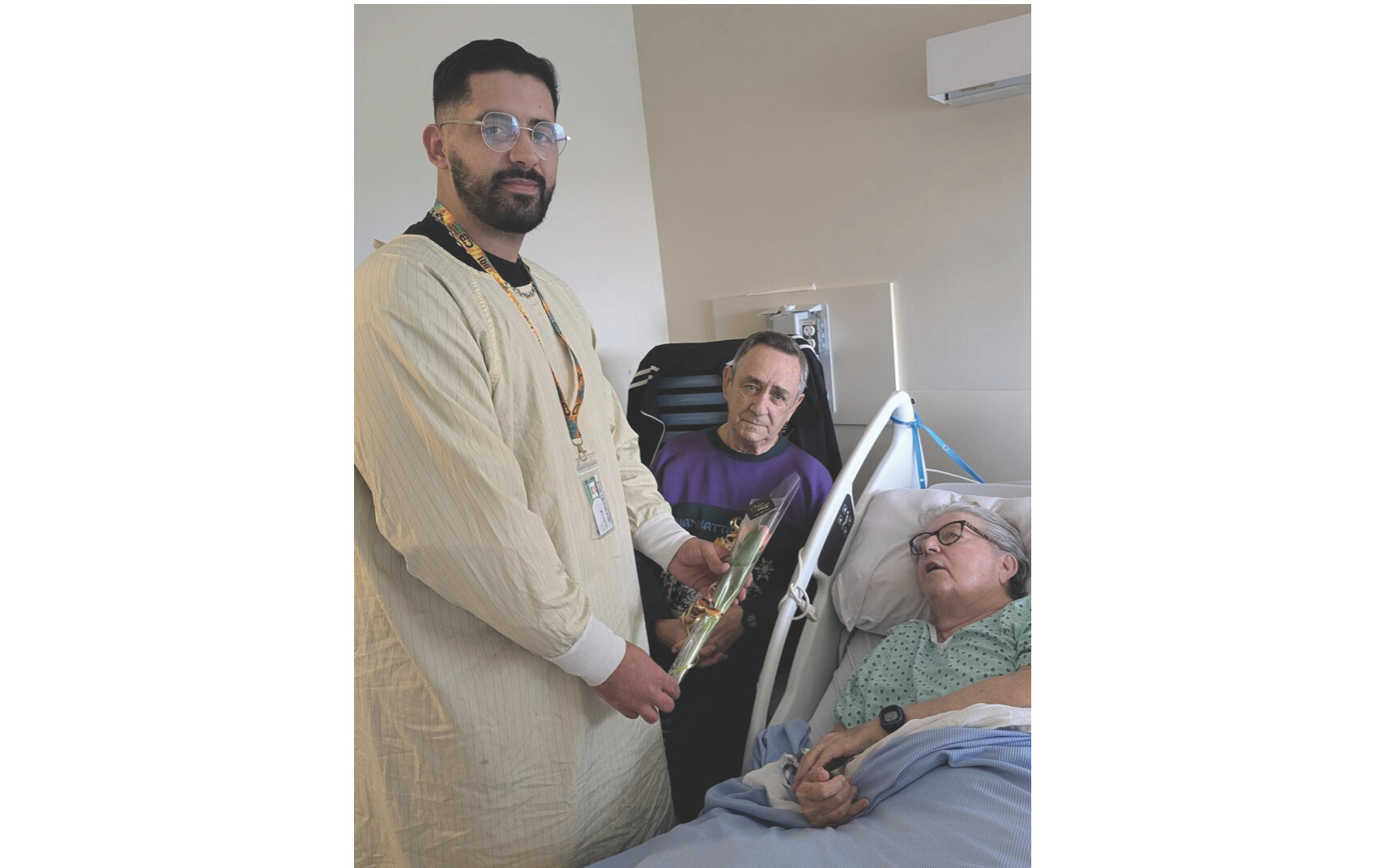
Chronic underfunding and a Quebec billing rule that leaves patients covering doctors' fees push Outaouais residents to seek care in Ontario, straining both provincial finances and the region's healthcare workforce, even as Quebec's health authority disputes the scale of the shortfall. Photo: Courtesy of the Santé Québec Outaouais Facebook page
Out of pocket: an underfunded Outaouais depends on Ontario for health care, and patients foot the bill
Tashi Farmilo
Outaouais residents routinely cross into Ontario for medical care their own region cannot provide, and many end up paying for it themselves. It is the product of a health system advocates say has been underfunded for decades, a workforce steadily drawn across the river by better pay, and a Quebec billing rule that leaves patients covering the difference when they seek care out of province. The reliance is old, but the strain has sharpened, even as Santé Québec Outaouais, the region's health authority, insists the funding gap behind it is barely one per cent.
The region has said for years it is shortchanged, and the province has conceded the point: the National Assembly recognized an Outaouais funding lag in a 2019 motion that was never acted on. Action Santé Outaouais puts the shortfall at roughly $348 million a year below what the rest of Quebec receives, money it says would pay for the doctors, nurses, beds and specialized services the region lacks. Without them, residents have long gone to Ontario for care Quebec cannot offer close to home, from specialist appointments to childbirth.
Why patients pay comes down to a rule unique to Quebec. Caroline Dupont, a spokesperson for the Régie de l'assurance maladie du Québec (RAMQ), explained that a hospital stay is covered anywhere in Canada under an agreement between the provinces: the bed, the nursing and the medication cost nothing. The doctor is the exception. "You're still gonna have to pay if a doctor works on you," Dupont said, even inside an Ontario hospital. No referral is required to claim the cost back, though one may still be needed to see an Ontario specialist, as in Quebec. What comes back is the problem: RAMQ refunds only what the visit would have cost in Quebec, where a family-doctor appointment runs about $30 to $80, and Ontario charges more. The province's advice to anyone crossing the line is blunt: buy private insurance for the gap the public plan won't cover.
That gap is baked in. Quebec is the only province that never signed reciprocal billing for most doctors' services, the arrangement that lets a physician charge a visiting patient's home plan directly. An Ontario doctor can bill RAMQ voluntarily, charge the patient in full, or bill only the difference between the two provinces' rates. Some border clinics take the RAMQ card and spare patients any upfront cost; many others charge Quebec patients the higher Ontario Medical Association rates or turn them away altogether.
The dependence is fiscal as well as personal. When Quebec cannot treat its own residents, it pays Ontario to do it, and that bill reached about $248 million last year, most of it hospital care charged straight to the province. The Outaouais drives the bulk of it: more than half of what Quebec paid Ottawa-area hospitals was for people from the region, and the Ottawa Hospital alone billed close to $45 million treating them. Fewer Quebecers than a year earlier are making the trip, yet the bill still rose, because Ontario keeps raising its rates. Quebec is paying more to send fewer people.
Santé Québec Outaouais says 361,339 people, or 91.1 per cent of the eligible population, have front-line access, most registered with a family doctor and the rest with a group practice. Another 11,210 remain on the waiting list. Élodie Nonnon, a communications advisor with Santé Québec Outaouais, said patient movement on and off that list reflects retirements, new doctors arriving, changes in practice and the reassignment of patients between providers.
The authority rejects the shortfall at the heart of the region's case outright. The $348-million figure, Nonnon said, relies on 2022-2023 data and ignores university hospitals elsewhere in Quebec that treat Outaouais patients for specialized care; counting those and actual 2024-2025 spending, she said the real gap narrows to about $18 million, or close to one per cent. She pointed to a new budget allocation model, introduced in the authority's first year, meant to tie funding more closely to population needs and services delivered rather than the old historical formula. On the more than $117 million advocates say drains to Ontario facilities each year, Nonnon said the authority does not have access to that information and referred the question to RAMQ. She also disputed that Quebecers pay anything for out-of-province care at all, saying billing arrangements and mechanisms exist between RAMQ and other provinces to ensure eligible services are reimbursed, an assurance that runs headlong into RAMQ's own account of patients recovering only the Quebec rate.
On retention, Nonnon said attracting and keeping physicians remains a priority, pointing to the planned Gatineau hospital as a draw for doctors and other professionals, a developing university teaching and research mission in the region, and ongoing recruitment efforts in family medicine and several specialties as the durable path to better access.
Money alone hasn't fixed the deeper problem: the region cannot hold onto staff a bridge away from higher Ontario wages. André Fortin, the Liberal MNA for Pontiac, says the Outaouais is short about 1,200 nurses now and will need close to 3,000 more to staff the 600-bed hospital Quebec plans to open in Gatineau around 2034. Training can't keep pace either, he said: the local CEGEP turned away more than 100 nursing applicants last year for lack of space. Those who do graduate can look down the road at a roughly $20,000 salary gap and a signing bonus to match. Even doctors who stay, he added, can't always work, since surgeries get pushed back again and again without enough operating-room nurses.
Fortin's proposed fix is one no government has tried: a separate, higher pay scale for Outaouais health workers, written into law rather than left to province-wide bargaining. "It's basically one size fits all in Quebec, but one size doesn't work for all," he said. He frames the status quo as residents paying twice, through their taxes and again at the counter, and argues no one should have to reach into their own pocket because the public system fell short. With a provincial election due in October, he predicts health care will run through the campaign.