
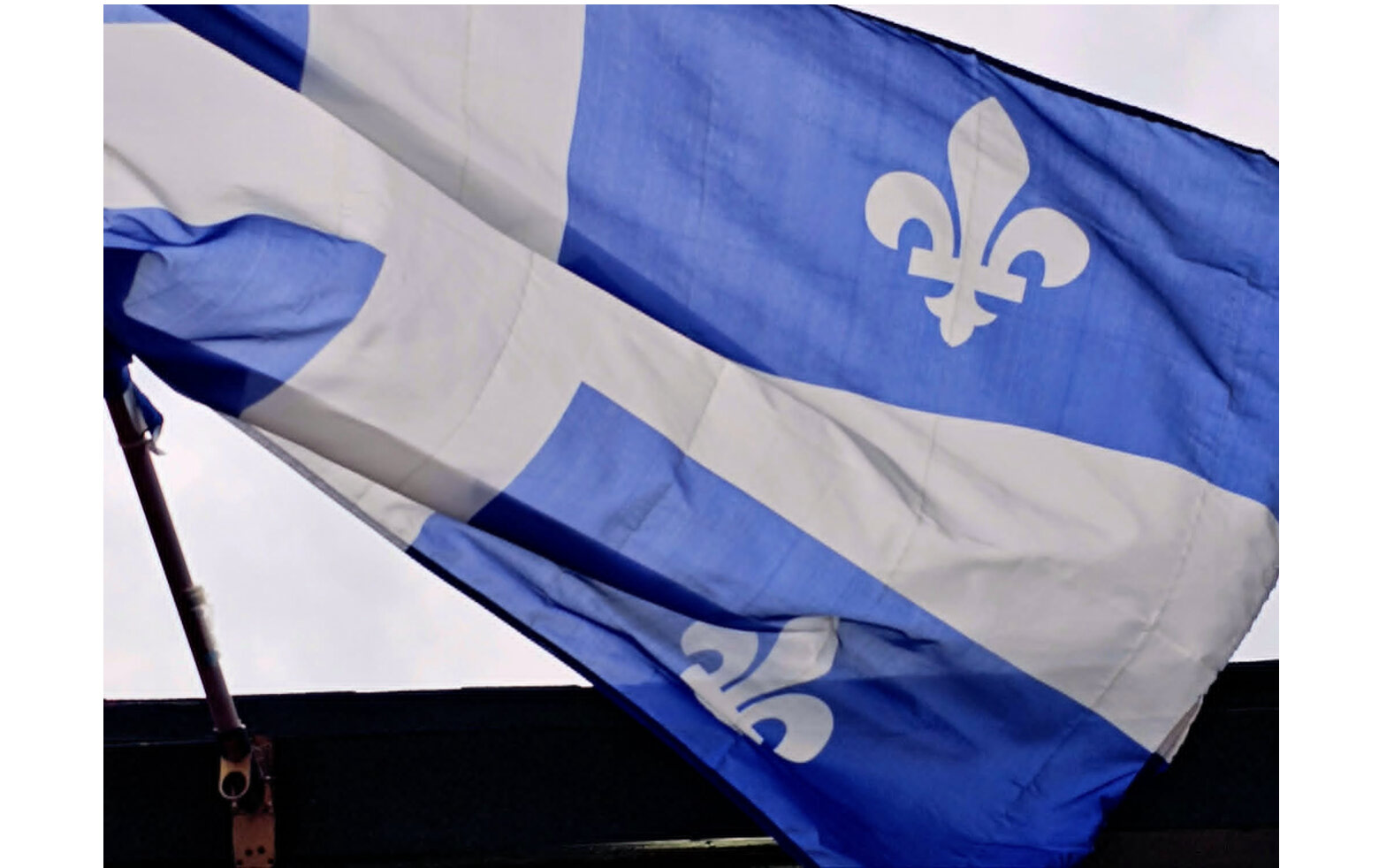
Canada's new Commissioner of Official Languages, Kelly Burke, used her first Quebec speech to pledge support for the province's English-speaking minority and its access to services in both languages, addressing the advocacy group TALQ a day after the Quebec government abandoned its contested constitution bill. Photo: Tashi Farmilo
New languages commissioner vows to defend English-speaking Quebecers as constitution bill is shelved
Tashi Farmilo
Canada's new Commissioner of Official Languages, Kelly Burke, used her first speech in Quebec to promise support for the province's English-speaking minority, telling community leaders in Montreal on June 12 that protecting minority-language access to essential services such as health care is a question of safety and respect. She delivered the address to the advocacy group TALQ a day after the organization welcomed the collapse of the Quebec government's contested constitution bill.
Burke, sworn in only weeks earlier, is still introducing herself to the people she now represents. She became Canada's eighth Commissioner of Official Languages at the end of March, taking over from Raymond Théberge, who had held the office since 2018. Before moving to the federal role, she spent three years, from 2020 to 2023, as Ontario's French Language Services Commissioner, working to protect and promote the rights of that province's French-speaking minority.
A native of Cornwall, Burke described growing up in a family that was anglophone, francophone and bilingual across several generations, and said that background shaped her commitment to both official languages. She was careful to present the pressures on language communities as running in both directions, arguing that French is being worn down across the country while English-speaking communities face their own difficulties. For her audience, the framing mattered, because it cast their concerns as part of a national conversation about language rather than a complaint aimed at their French-speaking neighbours.
Burke also restated a point the community seldom hears so plainly from Ottawa: that Quebec's roughly 1.3 million English speakers make up an official-language minority recognized under federal law. She said more had to be done to help the rest of the country understand the community's contributions, and noted that more than seven in ten anglophone Quebecers speak both languages.
The speech came at a tense moment. The previous day, June 11, Quebec Justice Minister Simon Jolin-Barrette announced that he was giving up on Bill 1, the Coalition Avenir Québec government's plan for a provincial constitution. With the legislative session due to close on June 12, the bill ran out of time and died, and Jolin-Barrette said the opposition had refused the consent needed to push it through. The legislation, tabled in October 2025, had been presented by then-premier François Legault as a way to anchor what he described as Quebec's shared values, among them secularism, the French language, gender equality and abortion rights. The Quebec Liberal Party, Québec solidaire and the Parti Québécois all stood against it, along with more than 200 organizations across the province.
TALQ was among them, having appeared before a National Assembly committee to oppose the bill, and it met the outcome with relief. The group's president, Eva Ludvig, argued that the proposal had never amounted to a legitimate constitution, pointing to a drafting process she said skipped meaningful public consultation and, at first, declined to recognize the English-speaking community as a full part of Quebec. She tied the bill to other recent measures the community regards as aimed at it, including the 2019 secularism law known as Bill 21, the 2022 strengthening of the French-language charter known as Bill 96, and Bill 84, the 2025 law that set out a provincial model of integration built around the French language.
That backdrop carried into the panel discussion that followed the keynote, which brought together leaders from the Quebec English School Boards Association, the Community Economic Development and Employability Corporation, the Community Health and Social Services Network, the English Language Arts Network, the English Parents' Committee Association, and Seniors' Action Quebec. The panellists portrayed a community that remains resilient but feels worn down by shifting laws and regulations, and several argued that defending French and supporting English-speaking Quebec need not be at odds. Their discussion ranged across the issues that will shape the community's future, from schools and seniors to economic development and employment, and returned to one underlying question: whether English-speaking Quebec will be treated as a partner in building the province or left to manage a gradual decline.
The pause on the constitution question may prove brief. TALQ expects the idea to resurface, most likely during the campaign for the provincial election scheduled for Oct. 5. The organization's director-general, Sylvia Martin-Laforge, noted that every party has signalled support for giving Quebec its own constitution, and called for any future effort to begin with a more open process and a clearer recognition that the province's diversity is a source of strength.
In a closing conversation with Ludvig, Burke said her task was to help secure the community's long-term future and to address the vulnerabilities it faces, and she promised to carry what she had heard beyond the walls of the event. Ludvig described the morning as a valuable chance to acquaint the new commissioner with the community's challenges and hopes, and said it was counting on her to be its advocate.
For Burke, the morning came back to a single idea she returned to more than once: "No Canadian should feel vulnerable as the result of language."